Is Slow the New Productive?
What would you stop doing, if doing less really does lead to greater creativity and accomplishment of what truly matters in your work?
Like you, I take great pride in the work I do. I value the connections I form with students as we consider challenging topics about leadership. I take great satisfaction when I’ve developed a learning experience in which students are challenged and engaged. I thrive when I’m engaged in great conversation about how to create a life that you love.
But, if you’re like me, you’ve also experienced days where minutes and hours are frittered away by email, logging in and out of systems (with multiple passwords and the dreaded Authenticator app), and responding to so many requests for your time. And when you’re not responding to these requests, you’re sending out your own emails and meeting requests, which essentially guarantees that those emails return to you like boomerangs.
The best scholars and creatives know that we need dedicated, uninterrupted time to engage in the type of deep thinking (or mind wandering) that leads to our greatest work. But in the midst of our frenetic schedules and hustle culture, where can we find that time?
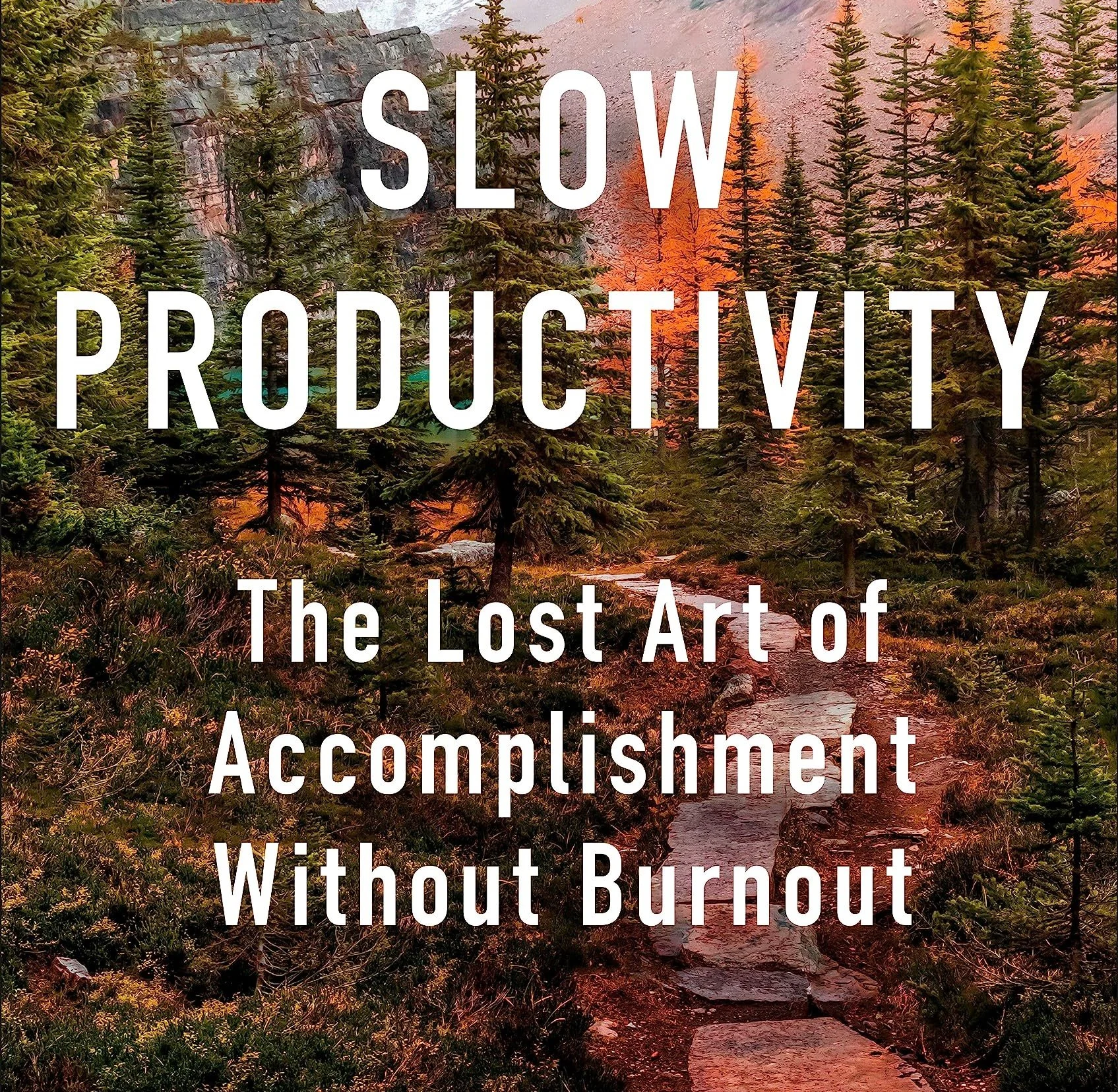
Enter Cal Newport’s latest book: Slow Productivity, which reminds us that we’re not the only who feels like computers took over our work life long before AI came on the scene.
For those of us who’ve thriving professionally because we’ve been diligently carving out time for Deep Work (another of Cal’s books) and trying to resist the “hyperactive hive mind” he describes in A World Without Email, this latest work offers us some powerful practical strategies to take us to the next level, where, “Doing les can indeed lead to more.”
If you want to do really, really great work (and spend less time on the miniature tasks that can easily eat up a day), I recommend Slow Productivity.
“When you approach a project without the hurried need to tend many barely contained fires, you enjoy a more expansive sense of experimentation."
(Newport, 2024, p. 59)